
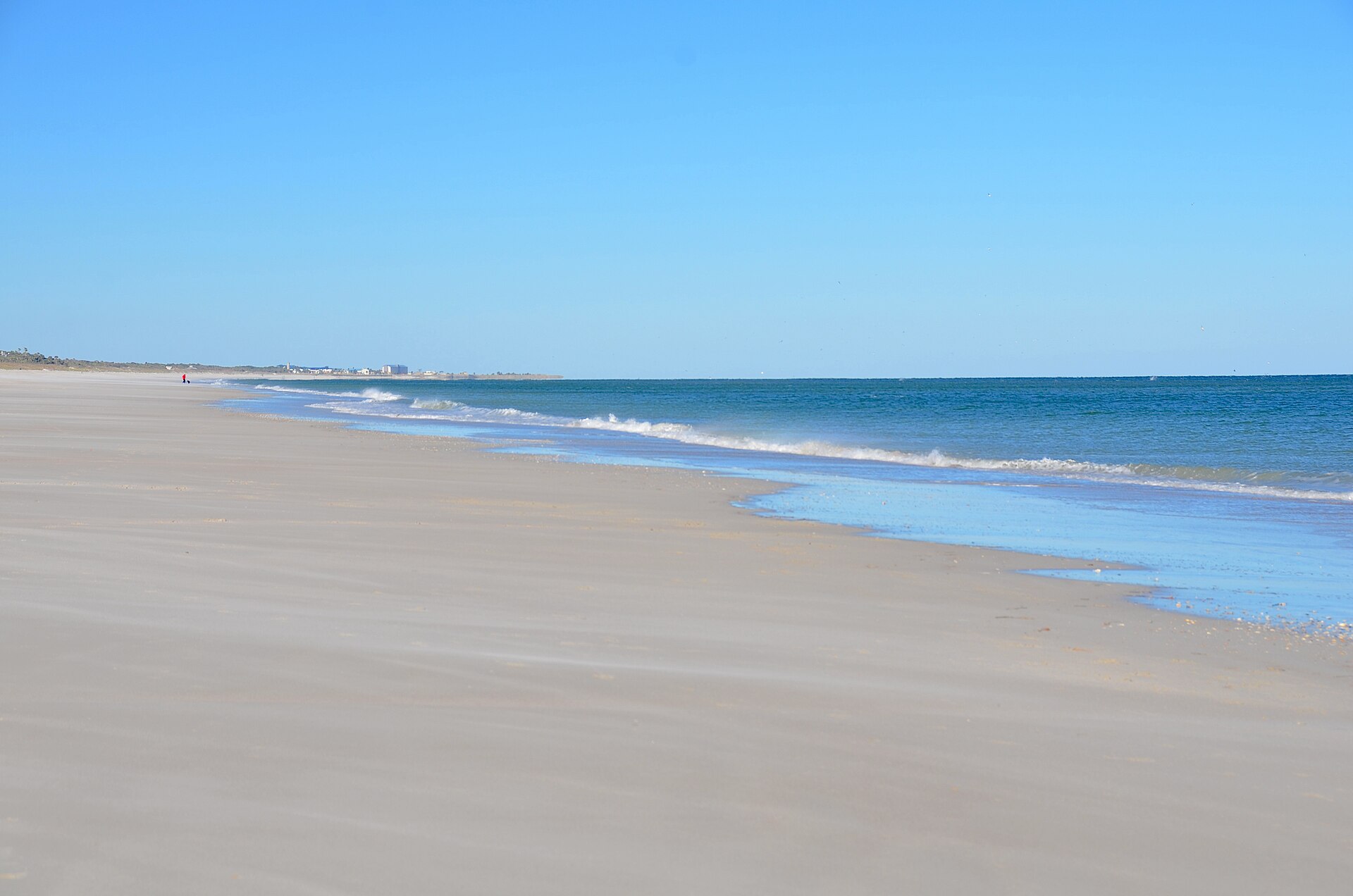
You can take a dog onto many Northeast Florida beaches, but the rules change several times between Amelia Island and Flagler Beach. One city allows an accompanied dog to swim briefly without a leash. The next requires a physical leash even in the water. Jacksonville Beach changes its permitted hours by season. Flagler Beach has a central no-dog zone. Several state-park beaches prohibit pets entirely.
This guide compares the published rules across the four counties currently covered by The Beach Database: Nassau, Duval, St. Johns and Flagler. It was reviewed on September 29, 2026. A beach described as dog-friendly still requires control, cleanup and attention to posted wildlife closures. Rules for trained service animals are governed separately from ordinary pet rules.
The quick answer
EASIEST YEAR-ROUND CITY OPTIONS
Atlantic Beach, Neptune Beach and Fernandina Beach
These city shorelines permit leashed dogs throughout the year without Jacksonville Beach’s seasonal time window. Each city still has its own leash, swimming and care requirements.
Compare every dog-friendly profile ↗For a long county-coast walk, St. Johns County is straightforward: dogs are welcome on county beaches but must remain leashed, including in the water. In Flagler County, Marineland, The Hammock, Painters Hill and Beverly Beach offer leashed access, while Flagler Beach permits dogs only outside its central N. 10th Street-to-S. 10th Street no-dog zone.
Do not assume that a pet-friendly park has a pet-friendly beach. Fort Clinch, Amelia Island State Park, Little Talbot Island, the Big Talbot beaches, Anastasia State Park and Gamble Rogers all restrict pets from the beach even when leashed pets are allowed elsewhere in the park.
Dog-beach rules compared
| Beach or area | When dogs may visit | Leash rule | Important exception or limit |
|---|---|---|---|
| Fernandina Beach | Year-round | Leash required | Remove waste; city ordinance applies to Atlantic beaches |
| Nassau County beaches | Year-round | Leash required | Owners must remove waste; county lists a $100 civil citation for violations |
| Atlantic Beach | Year-round, daytime and evening | Leash required on sand | Narrow off-leash exception while owner and dog swim together |
| Neptune Beach | Year-round | Physical leash, maximum 12 feet | Rabies tag required; water and shade required for visits over 30 minutes |
| Jacksonville Beach | Any time Oct. 1–Mar. 31; before 9 a.m. or after 5 p.m. Apr. 1–Sept. 30 | Leash, maximum 8 feet | Current rabies proof; accompanied-swim exception; no dogs in dunes |
| Hanna Park | During park hours | Leash, maximum 8 feet | Keep pets out of dunes, Dolphin Plaza, shelters and cabins |
| Huguenot Memorial Park | Not allowed for day visitors | — | No dogs on any shoreline, including inside vehicles; registered-camper rules differ |
| St. Johns County beaches | Year-round, subject to access hours and closures | Leash required on sand and in water | Use bags at walkovers and ramps; state and federal park rules can be stricter |
| Flagler County park beaches | During posted park hours | Leash required | Rules and facilities vary by access |
| Flagler Beach | Outside the central no-dog zone | Leash, maximum 8 feet | Dogs allowed north of N. 10th Street and south of S. 10th Street |
Nassau County and Amelia Island
Fernandina Beach ordinance allows dogs on the city’s Atlantic beaches when they remain leashed. The same practical rule applies on Nassau County’s unincorporated beaches: leash the dog at all times and remove waste. The county says a violation may result in a $100 civil citation.
Good developed starting points include Main Beach Park and North Beach Park in Fernandina Beach, plus Peters Point and Burney Park at American Beach in the county. The Amelia Island access directory separates named beaches from individual public entrances, which matters when parking and facilities are part of the plan.
Where dogs cannot use the beach
Fort Clinch State Park does not allow pets on its beach or boardwalks, although leashed pets may use designated trails and camping areas. Amelia Island State Park also prohibits pet dogs on the beach. A Florida State Parks label saying “pets” can refer to designated land areas rather than the shoreline itself, so open the park’s specific amenities page before traveling.
Duval County: three city systems and two major park exceptions
Atlantic Beach permits leashed dogs during the day and evening throughout the year. A dog may be off leash only while the owner and dog are together in the Atlantic Ocean; walking a dog through shallow water is not the same as swimming together. Reattach the leash before returning to the sand.
Neptune Beach also permits dogs year-round, but its ordinance is more detailed. Use a physical leash no longer than 12 feet, carry cleanup supplies, remove waste immediately and display a current rabies tag. If the visit lasts more than 30 minutes, the ordinance requires drinking water and shade for the dog. Neptune has a similar accompanied-swim exception, but tide-pool walking and ordinary wading do not qualify.
Jacksonville Beach changes its dog hours by season. From October 1 through March 31, dogs may visit at any time. From April 1 through September 30, they may visit only before 9 a.m. or after 5 p.m. Use a leash eight feet or shorter, carry current rabies proof, clean up immediately and keep dogs out of the dunes. The city recognizes a narrow off-leash swim exception when the owner maintains voice and visual contact, but the dog must be leashed again before reaching the sand.
Kathryn Abbey Hanna Park allows restrained pets in outdoor areas with a leash of eight feet or less. Keep pets out of dunes, Dolphin Plaza, shelters and cabins. By contrast, Huguenot Memorial Park prohibits dogs on every shoreline for day visitors, even when a dog remains inside a vehicle. Registered campers have separate rules. Little Talbot Island and the Big Talbot shorelines, including Boneyard and Blackrock, also prohibit pets on the beach.
St. Johns County: leash means leash, even in the water
St. Johns County welcomes dogs on county beaches, but requires a leash at all times, including while the dog is in the ocean. Owners must remove waste, and bags are available at many walkovers and vehicle ramps. That countywide rule makes planning simpler than in the Jacksonville beach cities, but a park within the county can impose a stricter rule.
Useful bases include Mickler’s Landing, Vilano Beach, St. Augustine Beach and Crescent Beach. Use the St. Johns County access directory to choose an entrance with the parking and facilities you need.
Anastasia State Park is the major exception: pets are prohibited from the beach. Fort Matanzas National Monument has its own federal rules and sensitive wildlife areas, so verify the current National Park Service rule before planning a visit with a pet rather than applying the general county rule automatically.
Flagler County: broad leashed access, with a central city exclusion
The new Flagler County collection adds several practical choices for a leashed beach walk. The public accesses serving Marineland, The Hammock, Painters Hill and Beverly Beach are identified as dog-friendly. County parks such as Old Salt Park and Varn Park list pets as allowed; keep the dog leashed, remove waste and follow the sign at the specific access.
Flagler Beach draws a clear geographic line. Dogs are prohibited in the central beach zone between N. 10th Street and S. 10th Street. They are allowed north of N. 10th Street and south of S. 10th Street on a leash no longer than eight feet. The Flagler County access directory lists the numbered walkovers and current verification notes, including access points whose present availability still needs confirmation.
Gamble Rogers Memorial State Recreation Area is not a dog-beach alternative. Florida State Parks permits pets in designated campground and land areas but prohibits them on the beach. The park also currently reports construction-related closures on its beachside facilities, making a same-day official check especially important.
Best fits by the kind of trip
- Flexible city walk: Atlantic Beach or Neptune Beach for year-round access without Jacksonville Beach’s summer daytime exclusion.
- Facilities on Amelia Island: Main Beach Park or Peters Point, while following the city or county leash rule.
- Long St. Johns County shoreline: Mickler’s, Vilano, St. Augustine Beach or Crescent Beach when keeping the leash attached in the water is acceptable.
- Quieter Flagler setting: The Hammock, Painters Hill or Beverly Beach; verify the exact walkover and parking before setting out.
- Flagler Beach visit near food and the pier: choose a legal access north of N. 10th or south of S. 10th; the central zone is off limits to dogs.
Before you go
- Open the exact beach profile. City, county, state-park and federal rules can change at the same county line.
- Bring the physical leash the jurisdiction requires. Voice control alone does not satisfy a leash rule, and retractable length can exceed a city limit.
- Carry bags, water and a bowl. Cleanup is required throughout the region; Neptune Beach adds explicit water and shade requirements for longer visits.
- Use a legal public entrance. Permission to walk the shoreline does not authorize crossing private property or parking in a private lot.
- Protect paws and wildlife. Test hot sand, avoid dunes and marked nests, give shorebirds room and do not let a dog chase wildlife.
- Check conditions the same day. Heat, rough surf, algae, construction and wildlife closures can make a legally dog-friendly beach a poor choice.
Sources and methodology
We compared current municipal ordinances and guidance, county beach rules, park-specific pet policies and official destination guidance where a municipal rule was not published in a usable online format. The rule summary is tied to the named jurisdiction rather than generalized across the coast. Review date: September 29, 2026.
- Nassau County: Beachfront Parks and Beach Uses
- City of Fernandina Beach: Beach ordinances
- City of Atlantic Beach: Parks and beach dog rules
- City of Neptune Beach: Ordinance 2023-05
- City of Jacksonville Beach: Dogs on the Beach
- City of Jacksonville: Hanna Park rules
- City of Jacksonville: Huguenot Memorial Park
- St. Johns County: Beach Rules and Regulations
- Flagler County: Old Salt Park
- Flagler County: Varn Park
- City of Flagler Beach: Ordinances Visitors Should Know
- Florida State Parks: Pet Policy
- Florida State Parks: Gamble Rogers experiences and amenities
Published and source-checked September 29, 2026. We favor original reporting, authoritative sources and clear limits over search-driven filler. Read our corrections policy or report an issue.