
A beach day can begin with a different question: who made it possible to spend a day here? At American Beach on Amelia Island, that question opens a history of Black enterprise, family vacations and the work of keeping a community’s story visible.
Our suggestion is to pair the shoreline with some time for its history. Start with the museum’s visitor information, learn why the dune called NaNa matters, and use the current beach guide to plan your access. The reward is a richer understanding of the place beneath the beach-day routine.
A place for a beach day of their own
In 1935, the Pension Bureau of Jacksonville’s Black-owned Afro-American Life Insurance Company bought 33 acres of oceanfront land on Amelia Island. Company president A. L. Lewis invited employees to enjoy the beach and held company outings there. The land was also divided into lots for sale. Later purchases enlarged the community, and in 1940 lots were offered to the wider Black community, according to the National Park Service’s founding history.
This was more than a real-estate venture. The Park Service explains that Black Americans were excluded from most public beaches in Florida under segregation. American Beach created a place where a seaside vacation could be built around belonging. Its significance comes from that unequal history and from the initiative of the people who made a community within it.
A vacation community, beyond the sand
After World War II, American Beach grew into a destination for Black vacationers from around the country. The Park Service’s account of its leisure culture describes motels, guest houses, restaurants and nightclubs alongside summer homes. Homeowners hosted visitors, excursion buses brought day-trippers, and the beach offered fishing, shell gathering and social events.
The Rendezvous and Ocean-Vu-Inn offered dining and dancing; small shops supplied snacks and ice cream. Those everyday details deserve attention. A place to stay, somewhere to eat and the freedom to spend time with friends are the working parts of a vacation, even when a photograph of the shore leaves them out.
Read those historical activities as a record of another era, not as today’s permission to drive, collect or enter a building. Current access and rules need their own check.
A changing coast and changing choices
Hurricane Dora damaged American Beach in September 1964. In its history of the community’s mid-1960s changes, the Park Service also describes how desegregation opened more travel choices for Black vacationers. Visits and overnight business at American Beach declined, and many establishments closed.
That history should not turn the achievement of civil rights into a story of loss alone. A useful way to read it is to hold two things together: wider freedom to travel, and a changing economic role for a community built when those choices were denied. Preserving the place helps keep both parts of the story in view.
The Beach Lady and NaNa
MaVynee Oshun Betsch, Lewis’s great-granddaughter, became known as the Beach Lady. A former opera singer who had performed in Europe, she devoted herself to environmental causes and to American Beach. The Park Service’s biography describes her history tours, tree planting and advocacy against development of NaNa dune. She died in 2005.
NaNa is now owned by the National Park Service. American Beach Historic District was added to the National Register of Historic Places in 2002, and a permanent museum opened in 2014. Betsch’s work invites a broader idea of preservation: the natural landscape and the community’s history can be part of the same responsibility.
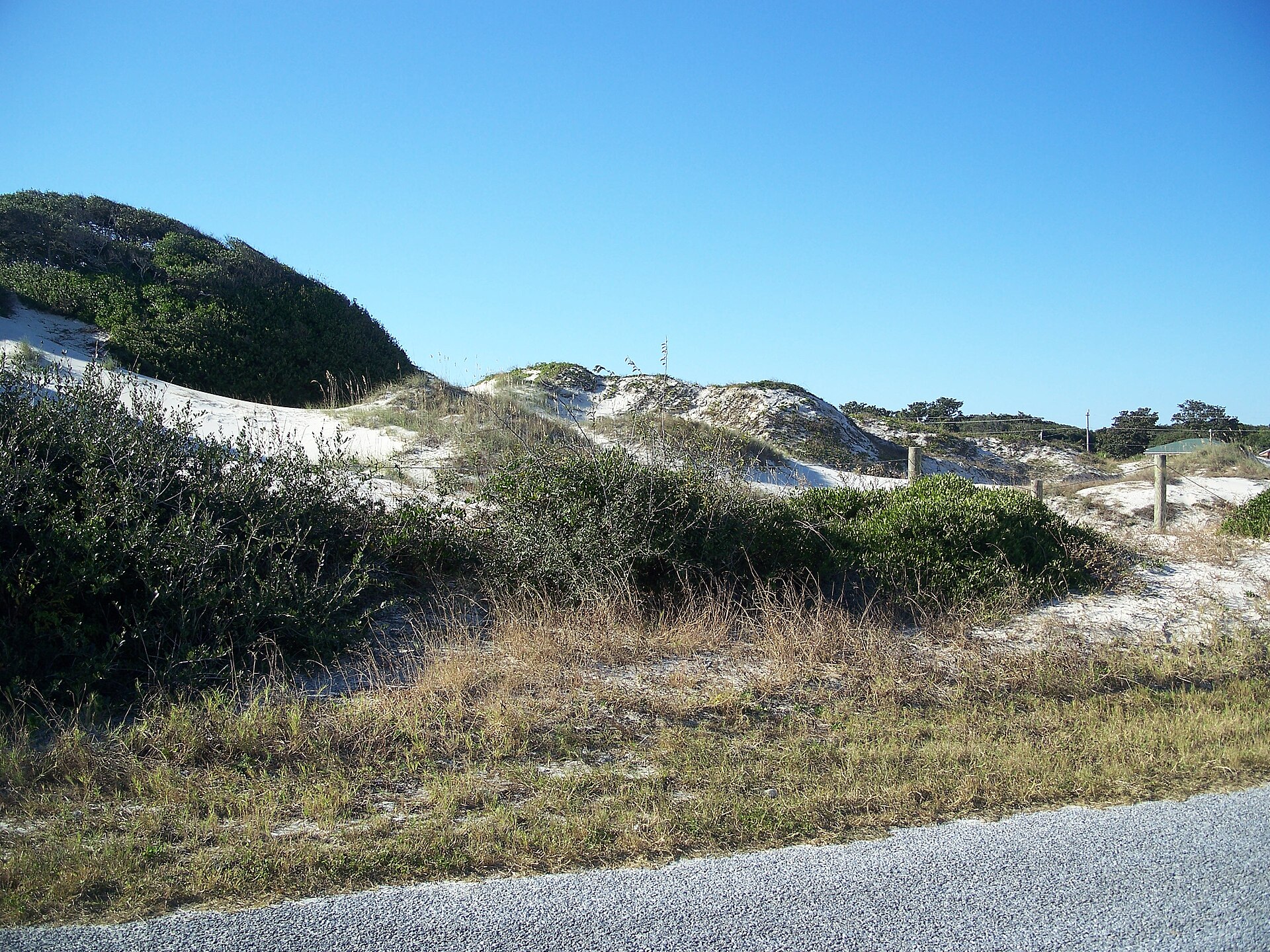
The hero photograph shows NaNa in October 2010. It is an archival view of a verified location, not evidence of today’s dune shape, access route or facilities. You do not need to climb a dune to appreciate it; observe from established public areas and honor signs and barriers.
Plan a visit with room for the story
Begin with the museum. The A. L. Lewis Museum, formerly called the American Beach Museum, continues the work of sharing this heritage. Check its own website or contact it for current opening times and group arrangements before setting out. A beach visit and a museum visit need not have the same schedule.
Choose the access separately. Our American Beach / Burney Park guide brings together practical planning information. The separate Lewis Street historic-access guide keeps that location distinct. Use the Amelia Island access directory to compare entrances rather than assuming every historic place is a public route to the sand.
Respect a living community. The Park Service’s NaNa visitor page identifies substantial private ownership around American Beach and asks visitors to respect residents’ privacy. Do not treat houses, vacant lots or historic buildings as open attractions. Follow posted access directions and check current beach conditions before entering the water.
For a family, try one question after the visit: what did people need, besides the ocean, to make a vacation here possible? For a quieter outing, read one piece of the history before walking, then notice how it changes what you pay attention to. These are editorial suggestions, not an official walking-tour route.
If you are planning an autumn outing, our fall beach-day guide adds seasonal considerations. For the natural material you may encounter along the shore, read why the wrack line belongs on the beach.
Sources and scope
Historical claims draw on the linked National Park Service histories and Betsch biography; present museum identity comes from the museum itself. Sources were checked October 6, 2026. The historical accounts explain the past; they do not verify current opening hours, building access, beach conditions or swimming safety. Visiting suggestions and the interpretation connecting leisure, history and preservation are our editorial judgment.
Published and source-checked October 6, 2026. We favor original reporting, authoritative sources and clear limits over search-driven filler. Read our corrections policy or report an issue.