
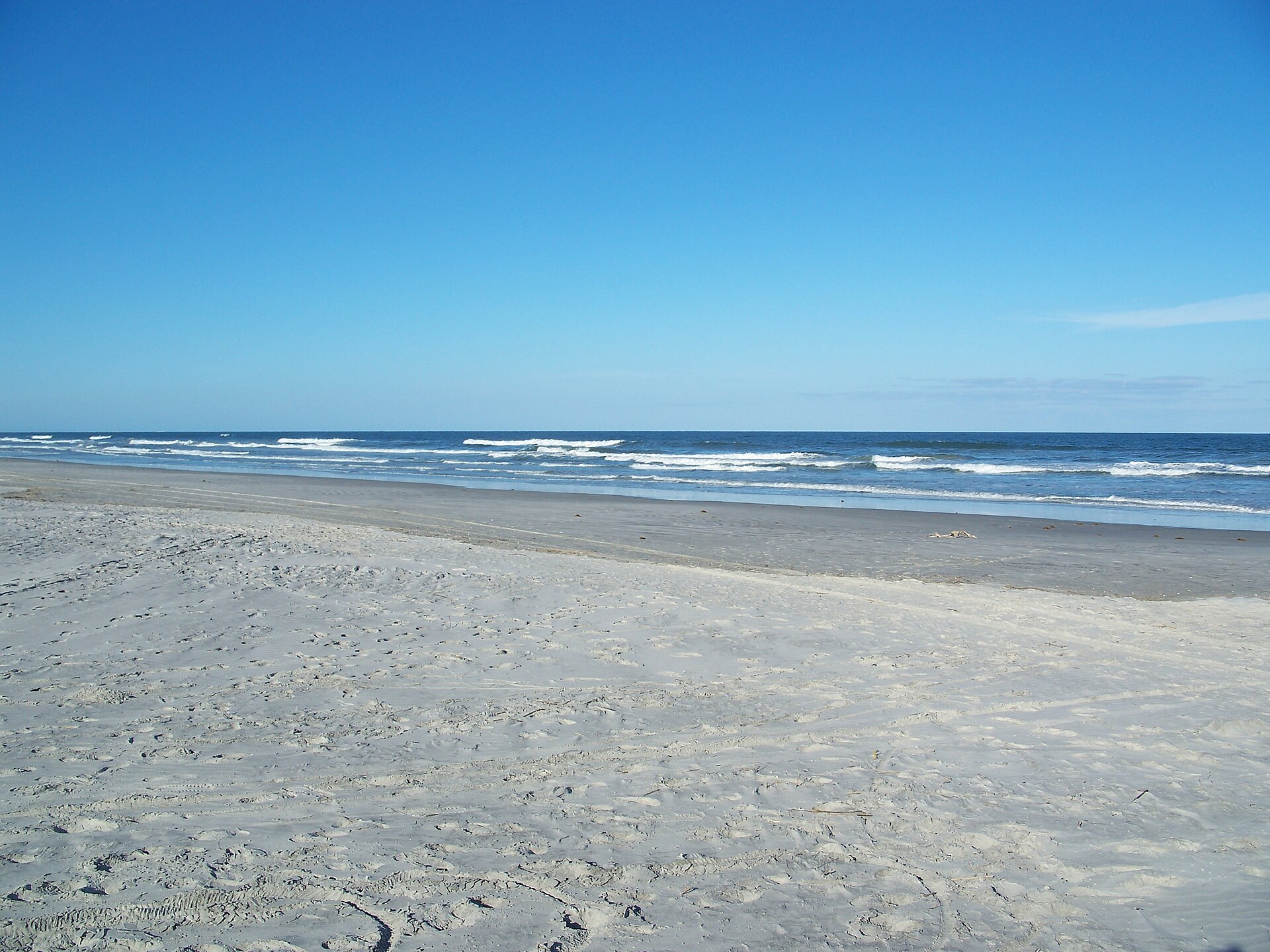
Summer gets most of the attention at the beach. It gets the family vacations, the packed parking lots, the umbrellas, the ice-cream stops and the photographs of children running toward the water.
Then September ends, the school-year rhythm returns, and many people mentally close the beach until spring.
The beach, of course, does not close.
Fall simply changes the experience. The air may feel lighter. Sunrise comes later as autumn begins. The brightest part of the day becomes easier to enjoy on foot. Migrating birds pause along the shoreline. A beach that felt busy and energetic in July can feel spacious and reflective in October.
It is still a beach day—just a different kind of one.
“In summer, the beach is often the destination. In fall, it becomes a place to wander, notice and stay awhile.”
Why fall belongs at the beach
Fall does not arrive at the coast in the same way it arrives inland. There may be no blaze of red leaves or first hard frost. Along much of Florida’s Atlantic shoreline, the change is subtler: a cooler breeze before sunrise, longer shadows across the sand and mornings that invite a walk instead of a race for shade.
The ocean may also hold onto summer warmth longer than the air, although water temperature varies considerably by location, weather and current. Never use the season alone to decide whether swimming is comfortable or safe.
What fall reliably offers is a change in pace. A shoreline visit no longer needs to revolve around spending the entire day in the water. It can be a sunrise walk, an hour of birding, an afternoon with a book or a stop on the way to dinner.
Six ways to enjoy a fall beach day
1. Take the walk that felt too hot in July
A long shoreline walk is one of fall’s simplest pleasures. Start near a legal public access, choose a turnaround point and leave enough daylight for the return trip.
Walking near low tide may provide firmer sand and a wider route, but tide timing and beach shape vary. Watch for incoming water near seawalls, inlets, rocks and narrow stretches where the beach can disappear at high tide.
The goal does not need to be distance. Fall is a good season for the slow walk: noticing dune plants, old shells, changing cloud patterns and the line where the last tide reached.
2. Watch the coast become a migration route
People are not the only travelers drawn to the shoreline.
Millions of shorebirds migrate through Florida during spring and fall. Some stay for the winter. Others stop briefly to rest and feed before continuing journeys that may cover hundreds or thousands of miles.
That makes fall a rewarding time to bring binoculars, but it also makes distance especially important. Walking directly through a resting flock forces birds to spend energy they need for migration.
Give birds a wide berth, walk around groups rather than through them, keep dogs leashed where permitted and never enter a posted wildlife area. If the birds repeatedly take flight or call as you approach, you are already too close.
3. Bring breakfast instead of a beach-day production
A fall beach outing can be wonderfully small.
Bring coffee, fruit or breakfast from a nearby local spot. Sit on a bench, at a permitted picnic area or on the sand above the active tide line. Watch the light change and leave before the rest of the day begins.
This version of the beach requires less gear, less planning and often less negotiation with the family. It can fit into an ordinary Saturday morning rather than waiting for a full vacation day.
Pack out everything you bring. Food scraps attract wildlife and predators, while plastic, fishing line and other litter can injure birds and sea turtles.
4. Try the activities that work better without peak-summer heat
Fall can be a comfortable season for activities that are harder to enjoy during the hottest part of the year:
- Surf fishing from a legal, uncrowded stretch of shoreline
- Kayaking or paddleboarding in a protected estuary
- Surfing when the local forecast and your experience support it
- Bicycling on an authorized beach or nearby coastal trail
- Photography during the softer morning and evening light
- Reading beneath a properly secured shade
- Visiting a lighthouse, historic waterfront or coastal park
- Pairing a beach walk with lunch at a nearby local restaurant
Rules vary by beach. Fishing licenses, launch access, beach-driving permits, park admission, dog restrictions and equipment rules should always be checked for the exact location.
5. Look for natural finds without treating the beach like a gift shop
Fall storms and changing tides can rearrange shells, wrack and other natural material along the shore. That makes beachcombing interesting, but discovery does not automatically mean collection is legal or responsible.
Never take a living shell. Do not remove wildlife, coral, plants or protected cultural material. Parks and preserves may prohibit collecting even empty natural objects. Leave driftwood and seaweed where they form habitat or stabilize the shore, and follow the posted rule for the specific beach.
A photograph is often the best thing to bring home. Our shelling and shark-tooth guide links to beach-specific collection guidance.
6. Stay for the evening—but plan for less daylight
A fall sunset walk can be beautiful, particularly when the lower light catches clouds, dunes and wet sand. It can also become dark earlier than expected.
Check the actual sunset time, park closing time and gate schedule before setting out. Carry a light, remember where you entered and avoid depending on an unfamiliar access remaining open after dark.
Artificial light can also affect wildlife. Florida’s sea-turtle nesting season generally extends through October 31, when late nests may still be hatching; timing varies by location and species. Avoid flashlights, phone lights and flash photography on the beach after dark; keep any necessary access-path lighting low and directed away from the shore. Remove gear and fill holes before leaving.
What fall changes—and what it does not
The temperature may change. The ocean’s hazards do not disappear.
Rip currents occur throughout the year and can form on bright, seemingly calm days. Distant tropical systems can produce dangerous waves and currents even when the local sky is clear.
Check the National Weather Service surf forecast, local beach flags and any lifeguard or beach-patrol guidance before entering the water. Choose a beach with a lifeguard on duty and swim near them, never swim alone and do not interpret the absence of a flag as proof that conditions are safe.
If caught in a rip current, do not exhaust yourself trying to swim directly against it. Float and signal for help if you cannot escape. If able, swim parallel to the shoreline to get out of the current, then angle back toward the beach.
Summer may be over. Hurricane season is not.
Atlantic hurricane season continues through November 30. Fall beach plans should remain flexible, especially when a named storm or strong coastal system is anywhere in the region.
A storm does not need to make local landfall to affect surf, erosion, access roads or rip-current risk. Check official forecasts rather than relying on the weather shown by a general phone app.
The air may feel cooler. UV exposure remains.
Sun protection is an all-season habit. Ultraviolet rays can reach skin on cool and cloudy days and reflect from sand and water.
Check the daily UV Index, use broad-spectrum sunscreen, wear protective clothing and sunglasses, and seek shade when exposure is elevated. A pleasant breeze can make it easy to underestimate how much sun you are receiving.
The crowd may be smaller. Services may be reduced too.
Some beaches reduce lifeguard coverage or restroom hours outside peak season. A quiet beach should not be assumed to have the same services it offered in July.
Open the current beach guide—for example, Little Talbot Island State Park or Main Beach Park—and follow its official links and confirm important services before leaving home—particularly when accessibility, restrooms or guarded swimming are essential to the visit.
A simple fall beach-day checklist
Before leaving:
- Check the beach forecast, tides and rip-current outlook.
- Check for tropical systems, coastal advisories and local closures.
- Confirm the access point, parking rules and closing time.
- Verify whether lifeguards and restrooms are available.
- Review local rules for dogs, fishing, driving and fires.
- Check the UV Index even if the forecast is cool or cloudy.
- Bring water, sun protection and a light layer.
- Leave enough time to return before dark.
- Give migrating birds and marked wildlife areas plenty of space.
- Remove all gear, trash and food before leaving.
The season for a different relationship with the coast
Fall at the beach is less about recreating a summer vacation and more about seeing what summer can hide.
The light changes. The birds change. The reasons for going change.
You may still swim, surf or spend the whole day on the sand. But you can also arrive with nothing more ambitious than a cup of coffee and a willingness to walk until you feel ready to turn around.
The coast is still there after summer. In many ways, this is when it becomes easiest to notice.
Sources and further reading
The reflections on pace, light and enjoyment are editorial observations, not a forecast or a promise of smaller crowds. Safety, wildlife and planning guidance draws on the official sources below; check the exact beach and current conditions before each visit.
- National Weather Service: Beach Safety
- National Weather Service: Rip Current Questions and Answers
- National Weather Service: Hurricane Safety and Season Dates
- Florida Fish and Wildlife Conservation Commission: Sea-Turtle Nesting and Hatchling Safety
- Florida Fish and Wildlife Conservation Commission: Avoiding Bird Disturbance
- U.S. Fish and Wildlife Service: Giving Shorebirds Space
- CDC: Sun Safety Facts
- EPA: Understanding the UV Index
- National Weather Service: Surviving a Rip Current
- NOAA: Coastal Water Temperature Guide
- NOAA: Sea Breezes and Ocean Heat Retention
- Florida State Parks: Wonders of the Wrack Line
- Florida State Parks: Beaches of Fort Clinch and Responsible Collecting
- FWC: Trash, Fishing Line and Shorebird Protection
- FWC: Wildlife-Friendly Beach Lighting
- Atlantic Beach: Seasonal Lifeguard Staffing
- National Park Service: Tide and Beach-Walking Safety
- National Weather Service: Distant Hurricanes and Fall Rip Currents
Published and source-checked October 1, 2026. We favor original reporting, authoritative sources and clear limits over search-driven filler. Read our corrections policy or report an issue.