
A beach walk can become a treasure hunt without ever becoming a collecting trip. The curve of a shell, a worn piece of wood or a tiny animal at the water's edge can be the thing you remember long after the sand is out of your shoes.
Before putting a find in your pocket, pause. What is it? Is anything living in it? What does this particular beach allow you to remove? Those questions make for a more thoughtful outing—and sometimes a better souvenir than the object itself.
Choose a looking walk first
Give the walk a small theme: shell shapes, colors, patterns or the different textures along the shore. Take photographs and make a few notes. You do not need a full bucket, a rare find or a perfect specimen for the day to count.
This approach is especially useful when you do not yet know the local collection rules. You can enjoy noticing things while you confirm what may be taken. A beach described as good for beachcombing is not automatically a place where every natural object is a permitted souvenir.
A shell can still be a home
The National Park Service's Cape Lookout shelling guidance distinguishes uninhabited shells from shells containing a mollusk or another occupant. If an animal is present, leave the shell there. If you cannot tell whether a shell is occupied, the cautious choice is to leave it rather than try to empty or clean it on the beach.
Cape Lookout's published allowance is up to five gallons of uninhabited shells per person per day for noncommercial use. That is a rule for that national seashore, not a general North Carolina collection allowance. Confirm the current local guidance before collecting, and do not treat a maximum allowance as a target to fill.
Our South Core Banks guide provides a starting point for that particular island setting. Arrange your arrival and return separately; a shelling rule says nothing about whether a boat landing, transport service or beach route is available for your visit.
Admire the driftwood where it lies
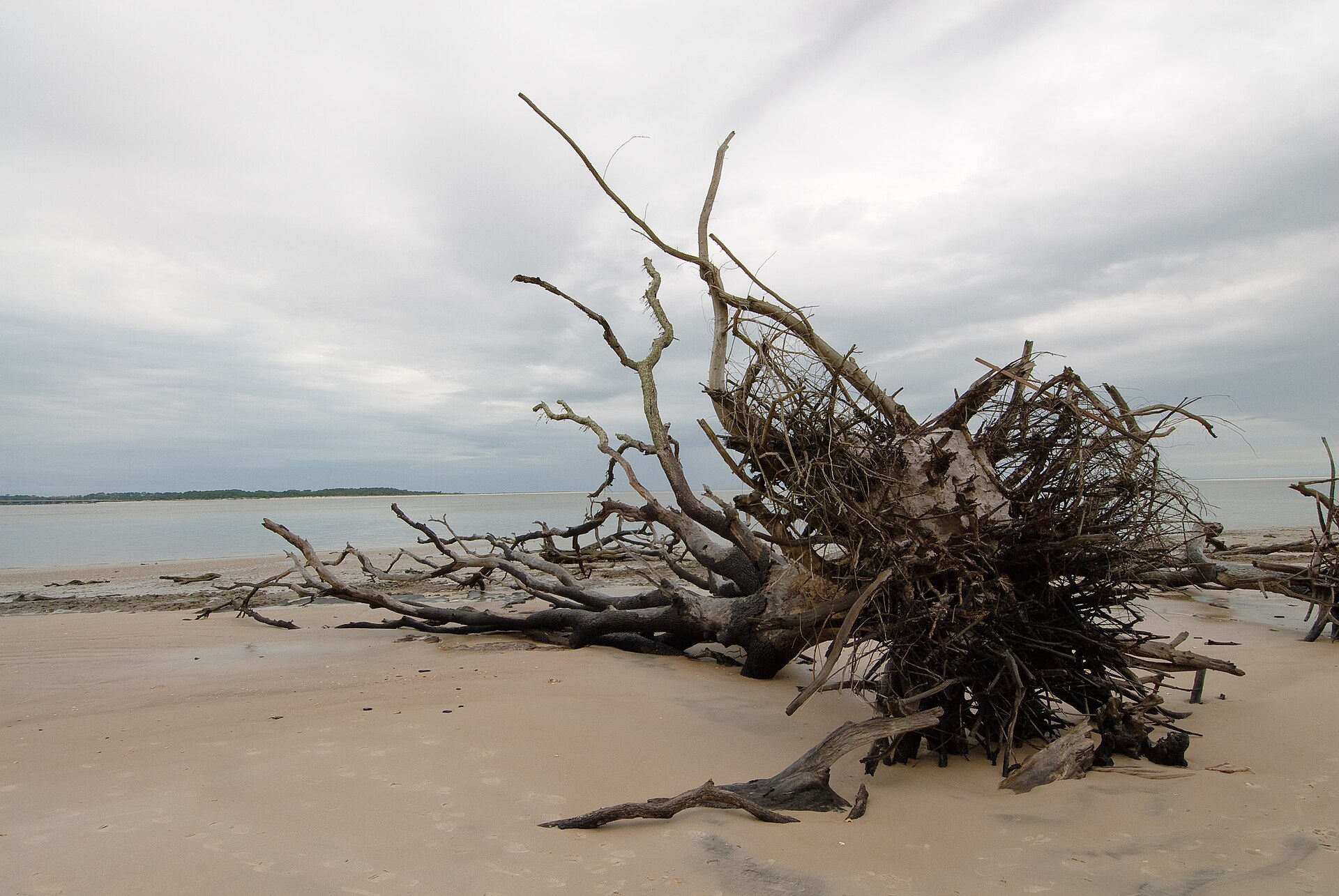
At Big Talbot Island State Park in Florida, driftwood is a protected park feature and collecting it is prohibited. That matters at Boneyard Beach, where the fallen trees are part of the landscape people come to see. Leave them in place rather than looking for a piece to take home.
A photograph can preserve the shape of a trunk or a tangle of roots without removing part of the scene. The archival photograph above shows this named beach; it does not establish today's shoreline, trail condition or access. Check the park's current visitor guidance when planning a trip.
Keep each kind of find separate
Permission to collect an empty shell does not answer the rules for driftwood, plants, fossils or objects that may be historical artifacts. Do not turn one allowance into a general right to remove whatever washes ashore.
When a find is unfamiliar, leave it in place and ask the managing agency about that object and location. A clear photograph can help with the question. Avoid handling sharp, suspicious or potentially hazardous material just to identify it; contact the site manager instead.
The same care applies to the route you take. Follow posted boundaries and the established public approach. Finding a promising patch of shells does not justify crossing a closure or a protected area.
Make the memory the collection
For a family outing, try a camera scavenger hunt: three different shell shapes, a pattern in wet sand and one object nobody can identify yet. Compare what you noticed on the way back. This gives children something specific to look for without making the outing depend on taking things home.
If a clearly permitted, unoccupied shell is the souvenir you choose, keep the local rule with the memory: where you found it, the date and what made it interesting. If the rules or identification remain uncertain, keep the photograph instead.
Before leaving, gather your own belongings and check the return arrangements. For the other half of the outing, read how to decide where the car stops. For the material that forms a line along many shores, our wrack-line article explains why it belongs there.
Sources and scope
Source-checked October 18, 2026. Cape Lookout's shell allowance and Big Talbot's driftwood prohibition belong to those named managed places. They are not interchangeable rules for other beaches. Wildlife presence, finds and current access are not guaranteed.
- National Park Service: Cape Lookout shelling rules and occupied shells
- Florida State Parks: Big Talbot experiences and protected driftwood
Published and source-checked October 18, 2026. We favor original reporting, authoritative sources and clear limits over search-driven filler. Read our corrections policy or report an issue.