
Before setting an alarm for beach photographs, check whether you can reach the sand at the time you want to shoot. A sunrise time, an open parking area and an open beach entrance are three different pieces of a plan.
Our recommendation: choose the picture you want, then fit it inside the entrance's actual opening hours and a comfortable return journey. A shorter session with time to look around is a better starting point than a race against a locked gate.
Choose the light you want
Do you want the sun itself at the horizon, a softly lit shoreline, or a family photograph with the sea behind you? Those goals need not require the same arrival time. The National Park Service's photography guidance describes the soft, even glow that can occur in the hour after sunrise or before sunset. That is useful photographic guidance, not a guarantee of good light at a particular beach.
For the date and location of your visit, look up the U.S. Naval Observatory's Sun and Moon data. It provides sunrise, sunset and civil-twilight times. Check the location, time zone and daylight-saving setting rather than copying a time from an old itinerary.
USNO distinguishes twilight from sunrise and sunset: twilight occurs before sunrise and after sunset, while the calculated rise and set times assume a level horizon and average atmospheric conditions. Clouds and the visible horizon affect the light you actually encounter. A twilight time is neither an access rule nor a promise that the path back will be well lit.
Our planning suggestion is to scout the view during an ordinary daytime visit. Decide where you can stand on an established route and what will be in the frame. If your chosen light falls outside permitted access, change the time or the entrance; do not build the outing around an assumed exception.
Read the hours for the entrance
Little Talbot: compare sunrise with the opening time
Florida State Parks lists Little Talbot Island's hours as 8 a.m. to sunset, every day. If the sunrise you want to photograph is before 8 a.m., those posted day-use hours do not provide a way to arrive on the beach for it. Plan a later session or confirm a different authorized arrangement directly with the park before relying on it.
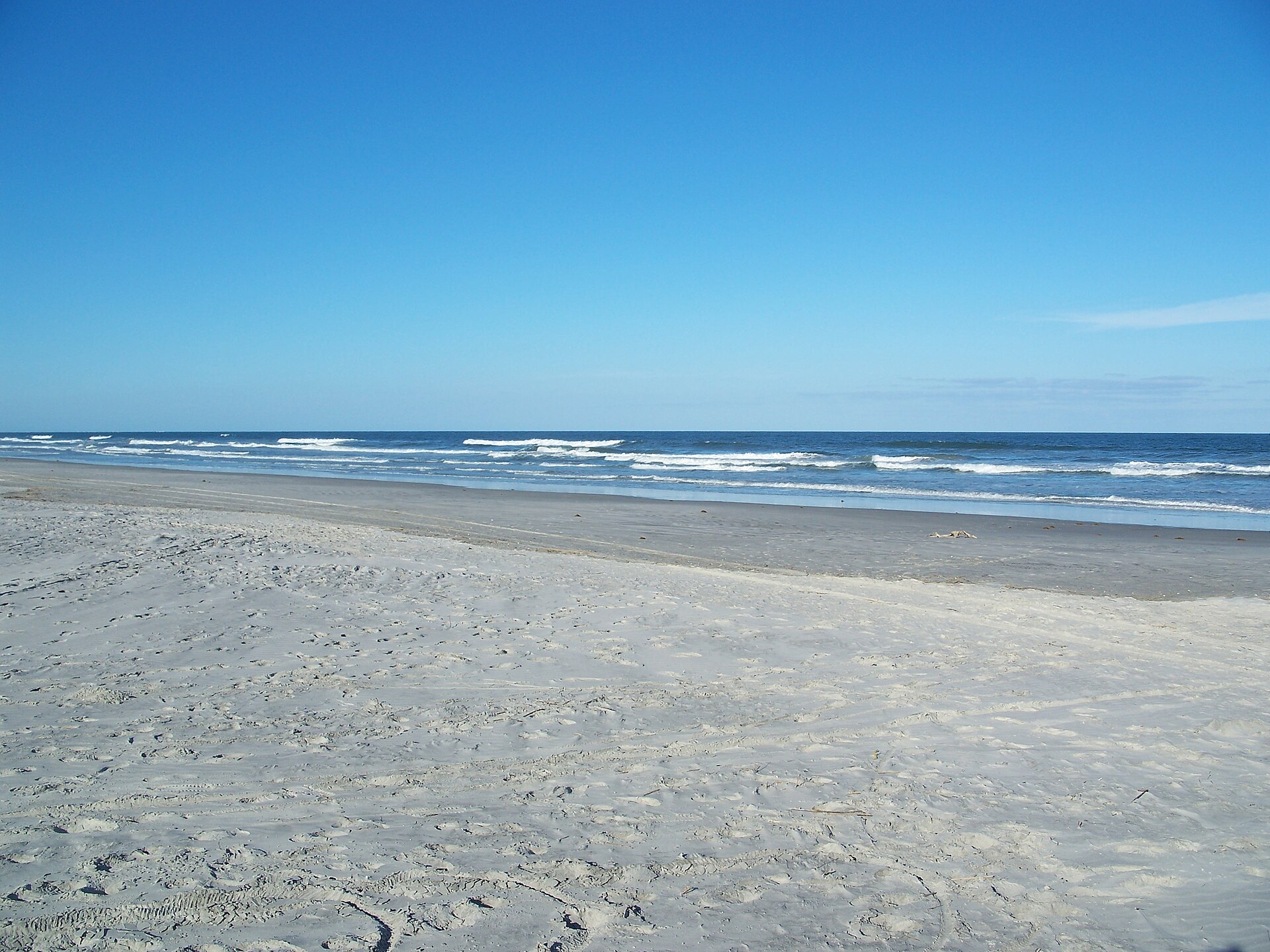
Our Little Talbot Island guide is a starting point for the entrance and beach context. Read the park's current alerts as well as its routine hours. The archival photograph above shows the named beach in 2010; it does not establish today's route, shoreline or opening arrangements.
Big Talbot: the boat ramp has separate hours
The Big Talbot Island hours page lists the park as open from 8 a.m. until sundown, with a separate statement that the boat ramp is open 24 hours. That exception describes the boat ramp. It does not, by itself, establish after-hours access to Boneyard Beach or its trails.
For Boneyard Beach, the park's Hiking section identifies Shoreline Trail from the north end of the Bluffs parking area. Use our Boneyard Beach guide alongside that specific route information. Do not substitute a nearby parking pin for the entrance you have checked.
Set a pack-up time, too
For an evening outing, work backward from the required departure time. Allow for packing the camera, walking back, loading the car and some margin. If the park closes at sunset, a plan that keeps you photographing on the sand until sunset leaves the return journey unresolved. Ask the manager about any unclear closing instructions before the visit.
A simple planning note can hold five things: the exact entrance, its opening and closing hours, your intended shooting time, a pack-up time, and an alternative. Estimate the walk at your own pace, with the people and equipment coming along. Leave extra time if this will be your first visit.
Check the tide separately. NOAA's tide-prediction service lets you select a station by map or search. Confirm that the station and date are relevant to your outing, then ask the local manager about route limitations. A prediction is not a guarantee of a dry passage or safe footing. At Big Talbot, the park notes that low tide exposes more beach; that does not turn every exposed area into a suitable photography position.
Keep the photograph within the visit's limits
Big Talbot's beach guidance asks visitors to stay on designated access trails, prohibits collecting driftwood, and says swimming is not recommended because of strong currents and marine wildlife in Nassau Sound. There is no lifeguard. Treat the fallen trees as subjects to photograph from a suitable shore position, not a reason to wade out for a different angle.
The same official page asks visitors to give wildlife space, avoid feeding or harassment, and stay on designated trails. Our suggestion is to change your framing rather than your distance from an animal. Keep paths available to other visitors while you compose.
Weather can end the session. In its beach lightning guidance, the National Weather Service says to leave for a safe building or vehicle when thunder threatens; an open-sided beach picnic shelter is not a safe refuge. Wait at least 30 minutes after the last thunder before returning outdoors. If that leaves no time within the permitted visit, save the photograph for another day.
Make a small plan worth keeping
For a first outing, we would choose one entrance and one main subject: a stretch of shoreline, a family portrait or a driftwood detail. Pack the equipment you already know how to use. Give yourself time to enjoy the beach between photographs instead of treating every minute as a shot to collect.
Use Explore Beaches to compare the published guides, then verify the chosen entrance with its responsible manager. The two Talbot examples illustrate specific Florida park policies, not a rule for every state or beach in the database. For the wider seasonal outing, our Fall at the Beach article offers more ideas.
The useful plan has room for a change: later light if the gate opens after sunrise, an earlier departure if the walk back needs it, or another day if weather intervenes. The photograph is part of the beach day. It does not need to determine every decision.
Sources and scope
Sources were checked October 13, 2026: Florida State Parks for the two parks' hours, the Boneyard route and local restrictions; the U.S. Naval Observatory for solar and twilight timing; NOAA for tide-prediction lookup; the National Park Service for photographic light; and the National Weather Service for lightning guidance. The NPS photography example comes from Grand Canyon and is used only for general light guidance, not beach access or conditions.
The checklists and suggested shooting plans are editorial advice. We have not conducted an on-site route inspection or established special photography access. Recheck alerts and any arrangements with the manager before travel. No current weather, tide, wildlife presence or access condition is inferred from the archival hero photograph.
Published and source-checked October 13, 2026. We favor original reporting, authoritative sources and clear limits over search-driven filler. Read our corrections policy or report an issue.