
A long beach walk has two journeys: the stretch you take outward and the same shoreline when you come back. Before choosing a distance, check the tide information for the whole outing. A low-tide time beside your arrival time is only the beginning of a plan.
At Little Talbot Island State Park in northeast Florida, the managing agency specifically recommends checking the tides for a beach walk: low tide exposes broad areas of hard-packed sand. That makes it a useful example of how timing can shape an outing, without turning a tide prediction into a promise about today's beach.
Choose the walk before choosing the time
Start with the entrance, the direction and the kind of outing your group wants. A short stroll with frequent stops needs a different plan from a long out-and-back walk. Our editorial suggestion is to choose a modest route first, then decide whether the available tide window, conditions and time ashore fit it.
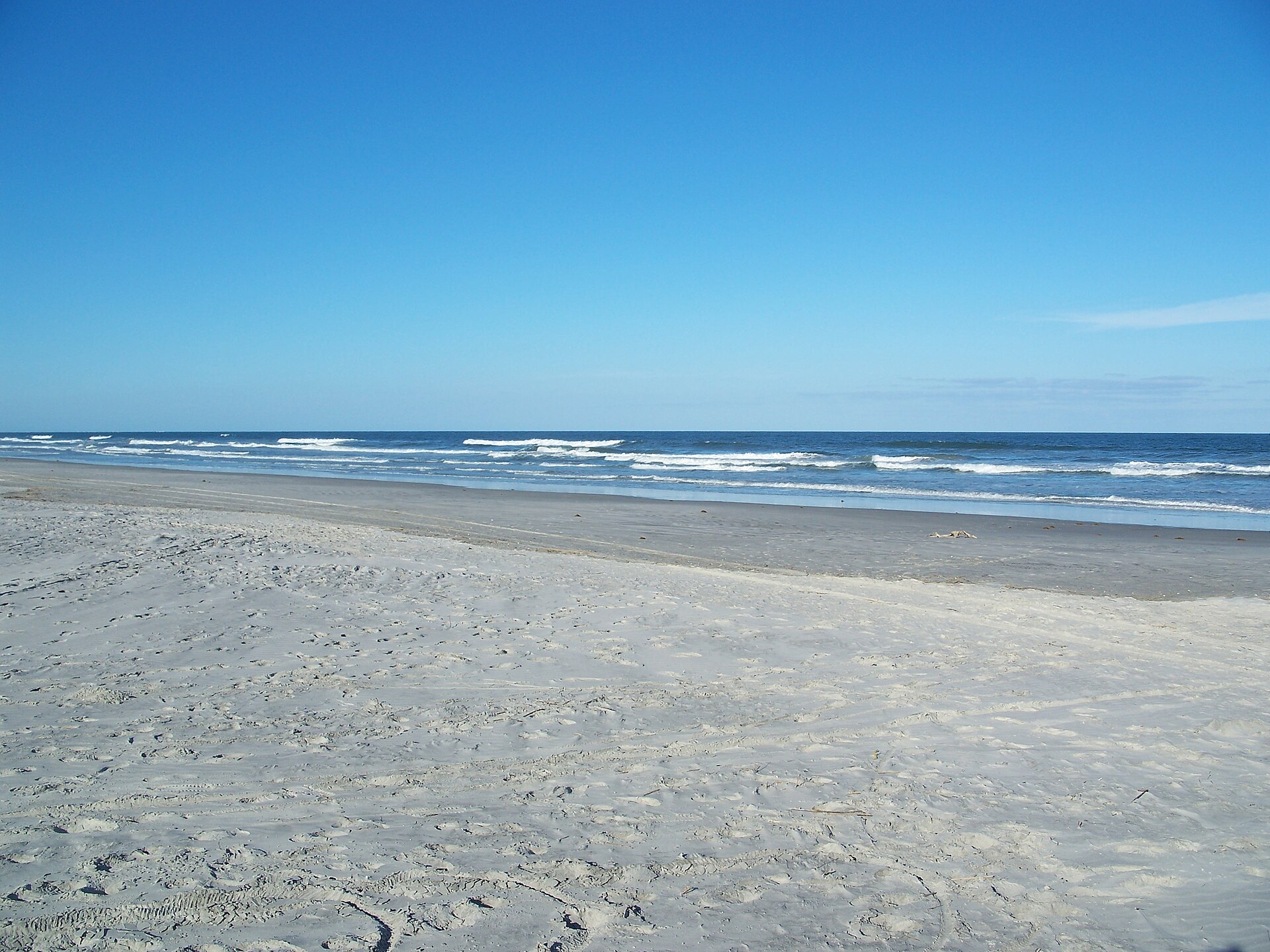
Use our Little Talbot Island guide to orient your visit, then consult the park's walking guidance and current notices. Ask staff about your intended stretch if the route is unclear. The archival photograph above identifies the beach; it cannot show how much sand will be available when you arrive.
Read the prediction carefully
NOAA's Tide Predictions help page explains how to select a station and date range, and how the time-zone and units controls work. Check the station name and location, the date of your visit and the displayed time convention. NOAA offers GMT, local standard time and local time adjusted for daylight saving time. A familiar-looking hour is not enough.
Keep the station name beside any times you save. Do not silently treat a nearby river or inlet prediction as an exact measurement on the ocean beach. If you cannot establish which prediction is appropriate to your route, ask the managing authority for guidance. This article intentionally supplies no tide time or beach-width estimate for a future visit.
Look beyond the single low-tide entry. Save the part of the prediction covering your outward walk, your stops and your return. The useful question is what the water level is predicted to do during the entire outing.
Give the return its own time
Before leaving the entrance, agree on a turnaround time and a shorter option. Include time for photographs, resting and getting back across the access route. Our planning preference is to leave room for a slower return instead of making the farthest point the goal.
If the route ahead no longer looks suitable, shorten the outing. Do not use the prediction as a reason to press through water, cross a closure or improvise a shortcut through protected dunes. Ask park staff about a suitable alternative before committing to a route that depends on a narrow stretch of shoreline.
Keep tides and conditions separate
NOAA's tides and currents FAQ explains that wind and other weather effects can cause observed water levels to differ from astronomical tide predictions. The table is a planning aid; it is not an observation of the beach in front of you, a surf forecast or a safety clearance.
Little Talbot also illustrates a different distinction: walking access does not establish permission to enter the water. The park's published water-access notice restricts the affected south-end area to dry-shoreline access and directs visitors to obey the no-water-entry signs. Check the notice and posted boundaries again for your visit. Low tide does not cancel that restriction.
For a day that might include swimming, use our guide to water clarity, water quality and swimming conditions as a separate planning step. None of those questions is answered by the low-tide time.
Save a short walk plan
- Route: the named entrance, direction and shorter alternative.
- Prediction: the station, date, displayed time zone and the whole outing window.
- Return: a turnaround time that includes pauses and the access route.
- Recheck: current park notices, weather and the actual shoreline on arrival.
- Decision: shorten or change the outing when the route or conditions do not fit.
The point is not to turn a beach walk into an expedition. It is to make the return part of the plan while you still have easy choices.
Sources and scope
Reviewed November 5, 2026: NOAA Tide Predictions help and tides-and-currents FAQ; Florida State Parks Little Talbot experiences page and water-access notice. NOAA supplies the prediction guidance; Florida State Parks supplies the exact park example and restriction. Route selection, turnaround planning and the checklist are editorial recommendations. This article does not establish today's tide, surf, entrance status or a safe walking distance. The photograph is archival.
Published and source-checked November 5, 2026. We favor original reporting, authoritative sources and clear limits over search-driven filler. Read our corrections policy or report an issue.