
Before making a swim the centerpiece of an autumn beach day, check something a sunny forecast cannot tell you: whether lifeguards will be working at the place and time you plan to enter the water.
A beach you remember from July may have a different staffing schedule in October. The useful question is more specific than whether a destination “has lifeguards.” Which stretch is guarded, on which dates, and during which hours? Build the outing around that answer before everyone arrives expecting a swim.
Read the season and the clock together
Cape Hatteras National Seashore gives a clear example. The National Park Service's lifeguarded-beaches page, updated June 10, 2026 and checked for this article on October 20, lists five designated locations with daily summer coverage from Memorial Day weekend through Labor Day, 9 a.m. to 5 p.m.
October 20 falls outside that published summer season. The schedule is not evidence of an on-duty guard for an October visit, and it does not describe every beach in the Outer Banks. NPS separately describes patrols between guarded beaches as dependent on staffing and schedules. A possible patrol is not the same arrangement as swimming beside an occupied lifeguard station.
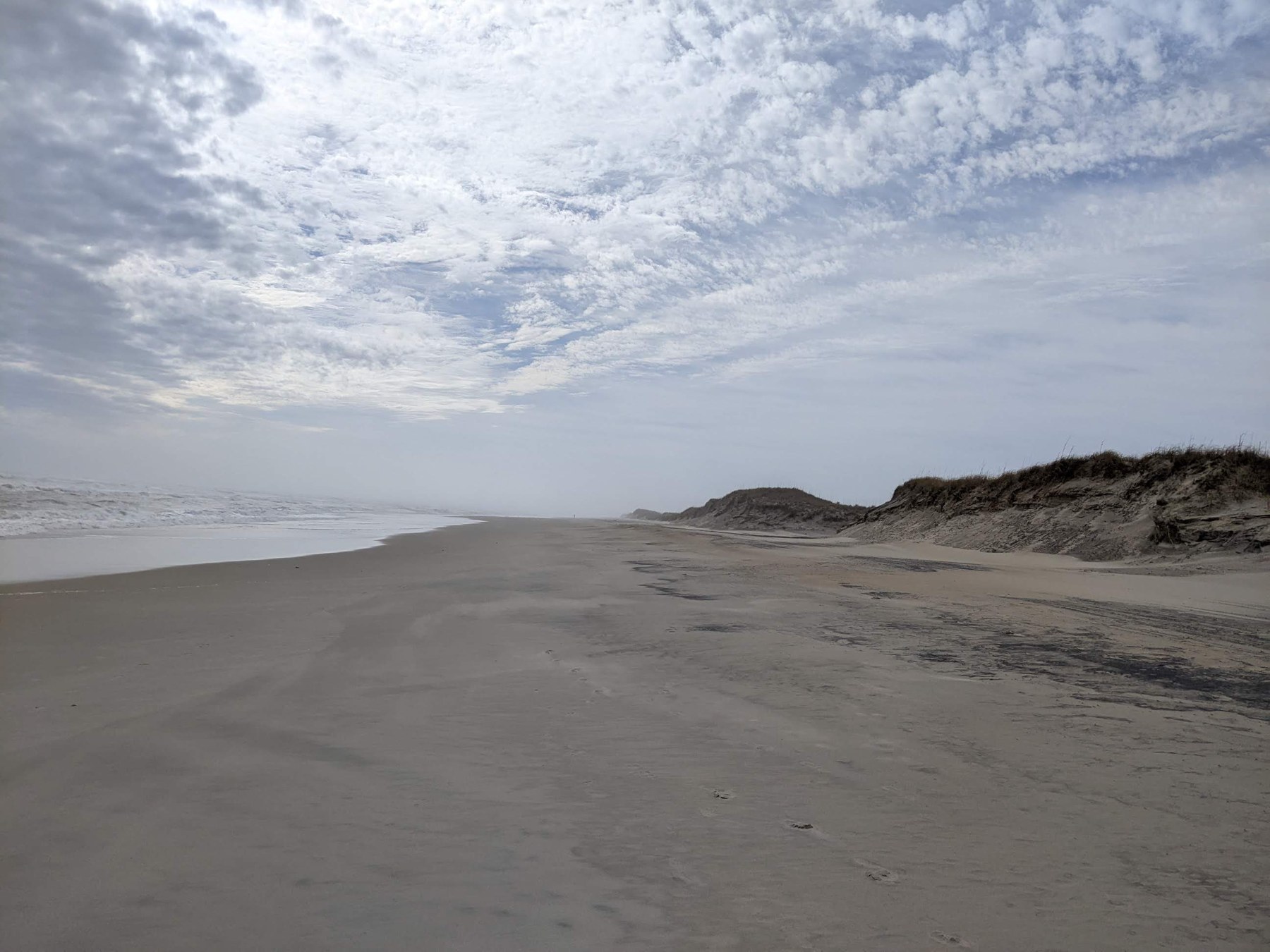
Use our Hatteras Village Beach guide to orient your trip, then consult the managing agency for the exact place you intend to visit. The archival photograph above depicts the beach behind the Graveyard of the Atlantic Museum; it does not identify a guarded swimming area.
Make three separate checks
Save three answers in your trip notes. Keeping them separate makes it easier to spot an unanswered question before you leave.
- The published schedule: find the responsible agency's dates, hours and named coverage area. Check whether the page describes the current season rather than an old announcement.
- Today's staffing: confirm that a guard is actually on duty at the intended swimming area. A tower, a map icon or a broad “seasonal” label does not answer that question by itself.
- Today's conditions: review the official forecast, advisories and local instructions. Staffing does not cancel a closure or make hazardous conditions suitable for swimming.
The National Weather Service's beach-safety guidance recommends checking official surf forecasts and beach advisories before leaving, then talking with a lifeguard or beach patrol before entering the water. It also explains that distant storms can send hazardous waves and currents to a beach under sunny skies. Check conditions for your destination, rather than treating the weather at home as the beach forecast.
Decide the alternative before arrival
If swimming is the point of the trip, choose a place and time with confirmed lifeguard coverage and follow the local conditions guidance. If you cannot establish that coverage, change the plan. Do not make “we drove all this way” the reason to enter the water.
The NWS rip-current guidance advises swimming only at beaches with lifeguards. It also warns that pleasant weather does not establish safe swimming or even safe play in shallow water. Moving a little closer to shore is not a substitute for a different plan.
Our editorial suggestion is to agree on a land-based alternative before packing: a walk on an open public route, sketching from a permitted dry-sand spot away from the surf, or a different activity off the beach. Choose the alternative to fit the actual weather, posted restrictions and everyone's mobility. A shore outing still needs its own conditions check; staying out of the water does not make every coastal location safe.
Give the family a clear expectation
Describe the outing as a beach walk until the swimming checks are settled. Pack for that plan, set a return time and choose a meeting place. This is an editorial planning approach, not a claim that every family or every beach needs the same itinerary.
Before leaving home, assign one adult to check the agency's latest information and save the exact entrance name and address. At the beach, read the posted instructions together and reassess the plan. If the available information is old, contradictory or unclear, keep that uncertainty visible instead of filling the gap with a reassuring assumption.
For the approach to the shore, see our parking-to-sand route checklist. For the other questions a beautiful-looking ocean does not answer, read clear water, clean water and swimming conditions. Neither guide replaces a current local assessment.
A short note to save before the trip
- Exact beach and entrance: ______
- Managing agency and current information page: ______
- Guarded area, season and hours: ______
- How we will confirm on-duty coverage: ______
- Forecast and advisories checked at: ______
- Our alternative and return time: ______
The blanks are useful. An unanswered staffing question should change the plan, rather than disappear beneath a destination's general reputation.
Sources and scope
Reviewed October 20, 2026. The Cape Hatteras schedule is a published seasonal policy for that national seashore's designated locations, not a live staffing report or an Outer Banks-wide rule. NWS links provide general safety guidance; this article does not report a current flag, closure, water temperature or swimming-safety assessment. Trip-note and alternative-outing suggestions are editorial interpretation.
- National Park Service: Cape Hatteras lifeguarded beaches — seasonal hours, designated-location scope and conditional patrols; updated June 10, 2026.
- National Weather Service: Beach Safety — pre-trip forecasts, advisories, local guidance and distant-storm hazards.
- National Weather Service: Rip Current Safety — lifeguard guidance and the limits of judging conditions by sunshine or shallow water.
Published and source-checked October 20, 2026. We favor original reporting, authoritative sources and clear limits over search-driven filler. Read our corrections policy or report an issue.