
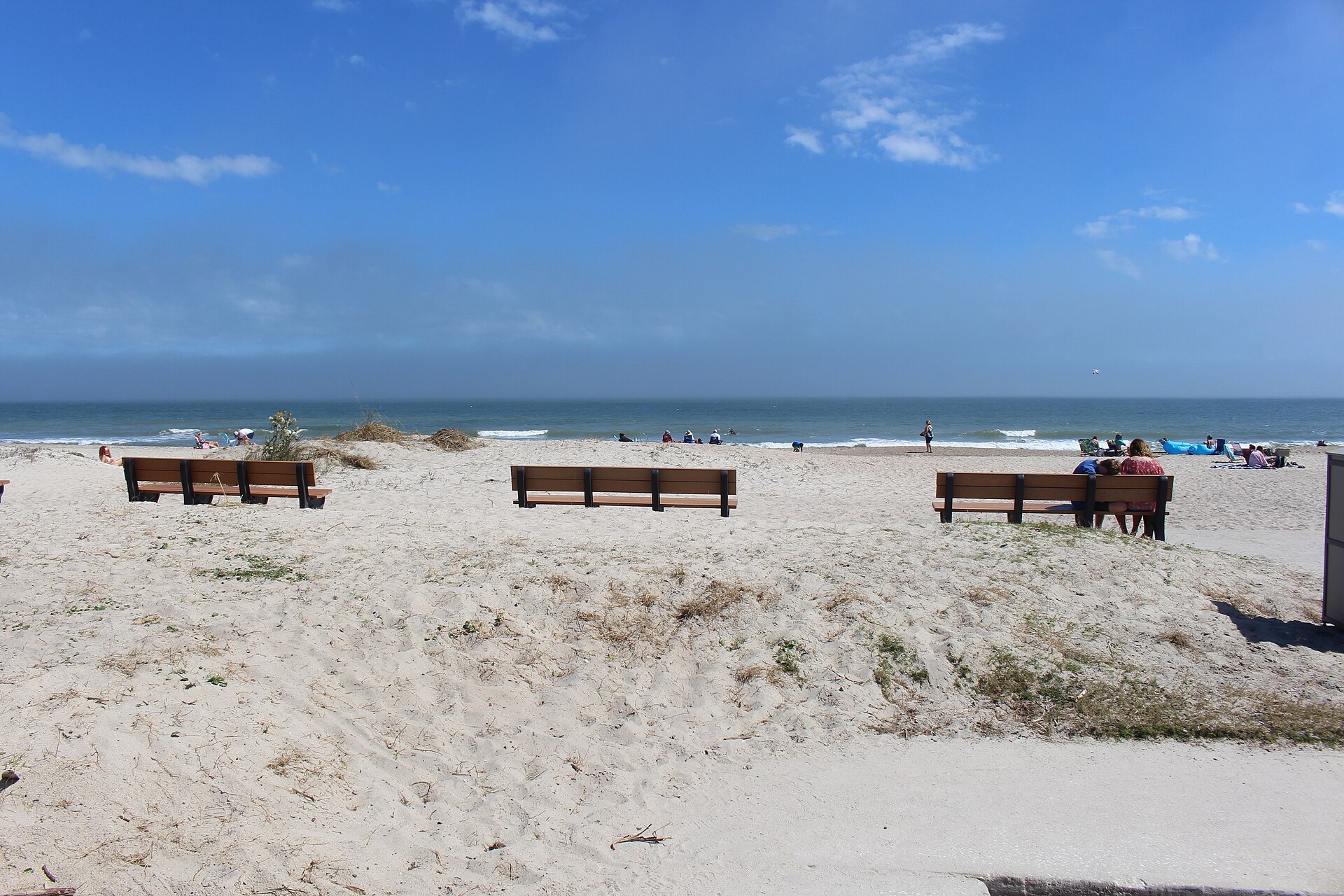
Sometimes the shift happens before your feet reach the sand. The road opens, the horizon appears, and the day suddenly feels less crowded. The beach has not solved anything. Your inbox still exists. But for a moment, your attention is no longer being pulled in twelve directions.
Researchers often use the term blue space for outdoor places shaped by visible water: oceans, rivers, lakes, wetlands and even some urban waterfronts. A growing body of research links access to these places with wellbeing, relaxation, movement and social connection. The strongest honest conclusion is modest: blue spaces can support wellbeing, but the size and cause of the benefit vary, and a beach visit is not a treatment.
What the research actually says
The World Health Organization describes green and blue spaces as places that can encourage physical activity and relaxation, offer refuge from noise and create opportunities for social contact. Observational studies have also found associations between living nearer the coast and better self-reported health and wellbeing.
Association is not proof of cause. People who live near attractive coastlines can differ in income, mobility, housing and access to recreation. A 2026 evidence map that reviewed 139 papers found that coastal settings were the most frequently studied kind of blue space, but the studies were too varied to declare which type of water or which specific feature produces the greatest benefit. That uncertainty matters. The evidence supports curiosity and time outdoors; it does not support miracle language.
Why a beach can feel different
1. The horizon simplifies the visual field
Most indoor and urban spaces fill our view with edges, signs, screens, traffic and things that need a decision. At an open beach, much of the scene resolves into three large bands: sand, water and sky. That visual simplicity can feel spacious because fewer objects compete for immediate attention.
2. The rhythm holds attention gently
Waves repeat, but never in exactly the same way. That combination of pattern and variation gives the mind something to follow without setting a task to complete. You can listen for the break, watch foam retreat or notice wind moving across the water. The experience rewards awareness rather than performance.
3. The setting invites ordinary movement
A beach walk barely needs a plan. Research using Health Survey for England data found that the relationship between coastal proximity and better self-reported health was partly explained by outdoor physical activity, primarily walking. The benefit may come from several things working together: movement, daylight, a change of scene and time away from routine.
4. The sensory change creates a boundary
Salt air, wind, shifting light, cool water and the texture of sand all mark a clear transition from the spaces where we work and manage daily life. That boundary can make it easier to stop rehearsing the next obligation. The effect is personal—some people find a lively boardwalk restorative, while others need an empty stretch of shoreline.
A 20-minute beach reset
You do not need a full vacation. Try this on a safe, ordinary beach visit:
- Minutes 0–3: arrive without documenting. Keep the phone put away. Notice the flag color, surf and weather first.
- Minutes 3–8: walk at an easy pace. Let the outing be movement rather than a workout.
- Minutes 8–12: choose one sense. Follow the sound of each wave, the line of the horizon or the feeling of wind.
- Minutes 12–17: widen your attention. Notice birds, clouds, dune plants and other people without trying to name everything.
- Minutes 17–20: leave with one detail. Carry away a memory rather than a shell: a color, a sound or a single sentence about the day.
This is not a clinical exercise. It is simply a way to keep a short visit from disappearing into another round of scrolling.
Choose the beach that restores you
There is no universally peaceful beach. Families may relax more when restrooms and lifeguards are nearby. A dog owner may value a long legal walking route. Someone seeking quiet may prefer a preserve with fewer services. The useful question is not “Which beach is best?” It is “What kind of beach day do I need today?”
START WITH A REAL PLACE
Main Beach Park, Fernandina Beach
A broad Atlantic view, a public access point and nearby facilities make it an approachable place for a short shoreline reset.
Explore the Main Beach Park guide ↗Sources and limits
This article summarizes environmental-health research for general interest. It does not claim that visiting a beach prevents or treats a health condition.
- World Health Organization: Assessing the value of urban green and blue spaces for health and well-being
- Beute et al.: Mental health benefits of specific blue-space types and characteristics
- Han and Zhang: Blue space and health/well-being—an overview of six meta-analyses
- Pasanen et al.: Neighbourhood blue space, health and wellbeing
Published and source-checked September 23, 2026. We favor original reporting, authoritative sources and clear limits over search-driven filler. Read our corrections policy or report an issue.