
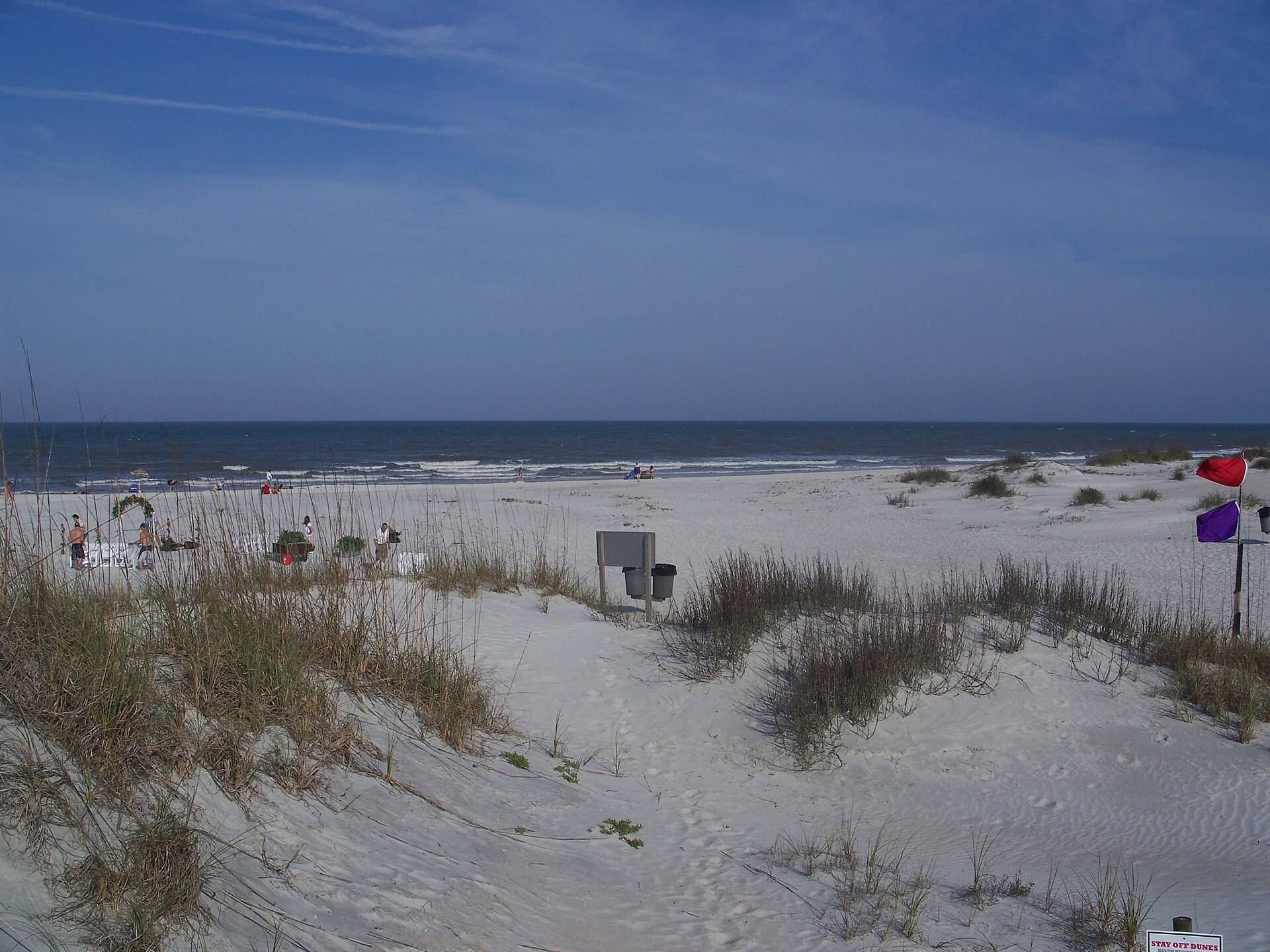
A flock resting ahead does not have to end a beach walk. It should change how you plan the next part of it: leave room, use an open route, or turn back before your approach sends the birds into the air.
For an autumn outing, make watching from a distance part of the plan. You do not need a species checklist or an ambitious mileage target. A short walk with time to stop can be a more satisfying choice than trying to reach a fixed landmark regardless of what is on the shore.
Why a resting flock needs room
The Florida Fish and Wildlife Conservation Commission's bird-disturbance guidance explains that migrating shorebirds use Florida's coast to feed and rest in spring and fall; some remain through winter. Making them take flight uses energy they need for their journeys.
FWC advises keeping away from concentrations of birds, going around them rather than deliberately making them fly, and respecting posted closed areas. Its general rule of thumb is at least 500 feet from a concentration. That is wildlife-viewing guidance, not a universal legal boundary or permission to cross a closure once you reach a measured distance.
Our practical interpretation: plan for space before you reach the flock. If the available open route cannot provide it, stop well back or retrace your steps. Do not solve a narrow passage by entering dunes, a closed area or the surf.
Anastasia: choose a habitat, not a guaranteed sighting
At Anastasia State Park in St. Johns County, Florida, the managing agency describes the park as a feeding and resting stop on the Atlantic Flyway. Its bird-watching page identifies several habitats, including beach, salt marsh and maritime hammock.
The park's experiences page distinguishes shorebirds gathering on the beach from water birds using the Salt Run marsh. This is a useful reason to decide which setting you want to observe. It is not evidence that a particular bird will be at a particular spot on the day you visit.
The bird-watching page asks visitors to use designated walkways, avoid marked or roped-off areas and never chase beach birds. Follow the park's posted directions when you arrive. This article does not identify today's nesting areas, open paths or flock locations.
Give the walk a flexible finish
Before leaving, choose an entrance and a return time, then treat the farthest point as optional. Our suggestion is to agree on a simple rule with your group: a flock, a closure or an unsuitable route can become the turnaround point. There is no need to finish a planned distance to have had a worthwhile visit.
- Look ahead before setting off. Pause at a permitted viewpoint and decide whether the open route gives birds room.
- Keep the whole group together. Explain the plan to children before reaching a flock, rather than trying to redirect an excited group at the last moment.
- Make stopping part of the outing. Bring binoculars if you have them; watching from a distance can be the activity, rather than a delay in reaching somewhere else.
- Leave a second option. If a shore walk does not fit the day's restrictions or conditions, choose another permitted activity or return another day.
These are editorial planning suggestions. They do not establish that a route is open, accessible or suitable for your group. Use our parking-to-sand route checklist to identify the access details you need, then check those details for the exact entrance.
A small plan to save
Put four lines in your trip note: entrance, return time, viewing plan, alternative. “Watch from an open viewpoint, then take a short walk if there is room” is a complete plan. Leave the bird names blank until you actually see them.
Afterward, a useful memory may be what the birds were doing: resting together, feeding at the edge, or moving along the shore. Watching without making them move is a good measure of success for this kind of day.
Sources and scope
Sources reviewed October 22, 2026. FWC provides Florida-wide disturbance guidance; Florida State Parks supplies the Anastasia-specific habitat and visitor guidance. The pages do not display publication dates for these passages. No current bird survey, closure report or conditions assessment is claimed. The route and trip-note method is editorial interpretation.
- FWC: Bird Disturbance — migration, energy costs, distance guidance and posted areas.
- Florida State Parks: Bird-Watching at Anastasia — stopover role, habitats and visitor conduct.
- Florida State Parks: Anastasia Experiences & Amenities — beach and Salt Run wildlife settings.
Published and source-checked October 22, 2026. We favor original reporting, authoritative sources and clear limits over search-driven filler. Read our corrections policy or report an issue.